


Great cocktail hour music is the part of an event that guests feel more than they notice. It fills the gap between the ceremony and dinner, or between arrivals and the main programme, and it decides whether that hour feels relaxed and elegant or awkward and quiet. I have played hundreds of cocktail hours as a solo guitarist across Southern California, at weddings, corporate receptions and private parties, and this guide shares what actually works: how long the music should run, which styles suit the mood, how loud it should be and how to choose between live music and a playlist.
What Cocktail Hour Music Needs to Do
The cocktail party has always been about conversation, and cocktail hour music should serve that. It has three jobs. First, it fills silence: an empty room with only the clink of glasses feels awkward, especially at the start when guests do not yet know each other. Second, it sets a mood, signalling whether the event is elegant, festive, romantic or relaxed. Third, it covers transitions: guests arriving from a ceremony, a delayed photo session, a late bar opening. Good music makes all of these feel intentional.
What cocktail hour music should not do is compete. If guests have to lean in to hear each other, or if a song with powerful lyrics pulls attention away from conversation, the music is working against the event.
How Long Should Cocktail Hour Music Last?
At weddings, cocktail hour usually runs about an hour, while the couple and wedding party take photos. In practice it often stretches to 75 or 90 minutes if photos take longer or the dinner room needs more time. At corporate receptions and parties, the welcome drinks period can run from 45 minutes to two hours.
| Event type | Typical cocktail hour length | Music recommendation |
|---|---|---|
| Wedding | 60–90 minutes | Continuous live music from the end of the ceremony |
| Corporate reception | 60–120 minutes | One or two sets with a short break |
| Private party or birthday | 45–90 minutes | Music from the first arrival until dinner or speeches |
| Gala or fundraiser | 60–90 minutes | Elegant background music until guests are seated |
Always book a little more time than the schedule says. Cocktail hours run long far more often than they run short, and a musician who stops at exactly sixty minutes while guests are still waiting leaves an awkward gap.
The Best Styles for Cocktail Hour
Spanish guitar and rumba
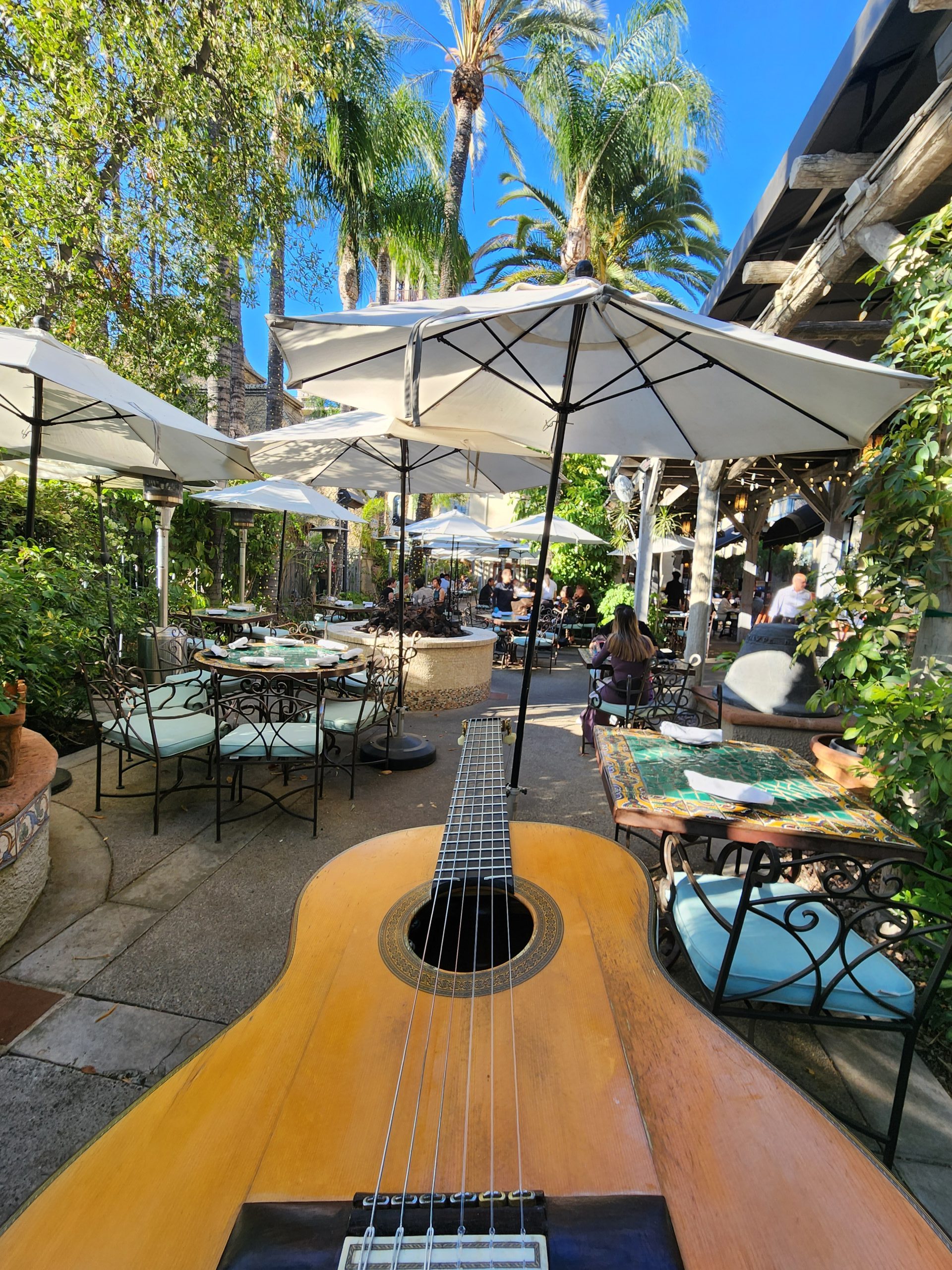
Warm, rhythmic and instantly atmospheric, Spanish guitar is the most requested cocktail hour style at Southern California weddings. It suits garden venues, haciendas, wineries and sunset terraces, and it has movement without needing volume. Explore it further on my flamenco guitar in Orange County page.
Bossa nova
Bossa nova, the gentle Brazilian style that blends samba rhythm with jazz harmony, may be the perfect cocktail music. It is relaxed, sophisticated and almost impossible to dislike. “The Girl from Ipanema,” “Corcovado” and “Wave” are classics.
Jazz standards
Songs from the Great American Songbook bring a timeless, polished feel that suits ballrooms, rooftop bars and corporate events. On solo guitar, standards like “Fly Me to the Moon” and “Autumn Leaves” sound classy without being stiff. If you love this style, the Palm Springs jazz guitar article goes much further into it.
Acoustic pop and rock
Instrumental arrangements of songs everyone knows give guests a moment of recognition and something to talk about. They work especially well for mixed-age crowds and relaxed parties.
Cocktail Hour Song Ideas by Mood
| Mood | Style | Song ideas |
|---|---|---|
| Sunset romance | Spanish and bolero | Bésame Mucho, Spanish Romance, Historia de un Amor |
| Relaxed elegance | Bossa nova | The Girl from Ipanema, Corcovado, Desafinado |
| Classic glamour | Jazz standards | Fly Me to the Moon, Autumn Leaves, All of Me |
| Feel-good familiar | Acoustic covers | Hotel California, Brown Eyed Girl, Wonderful Tonight |
| Festive energy | Rumba and Latin | Bamboleo, Volare, Oye Como Va |
A good guitarist reads the room and moves between these moods. I usually begin softly while guests arrive, lift the energy once drinks are flowing, and settle again as the call to dinner approaches.
Getting the Volume Right
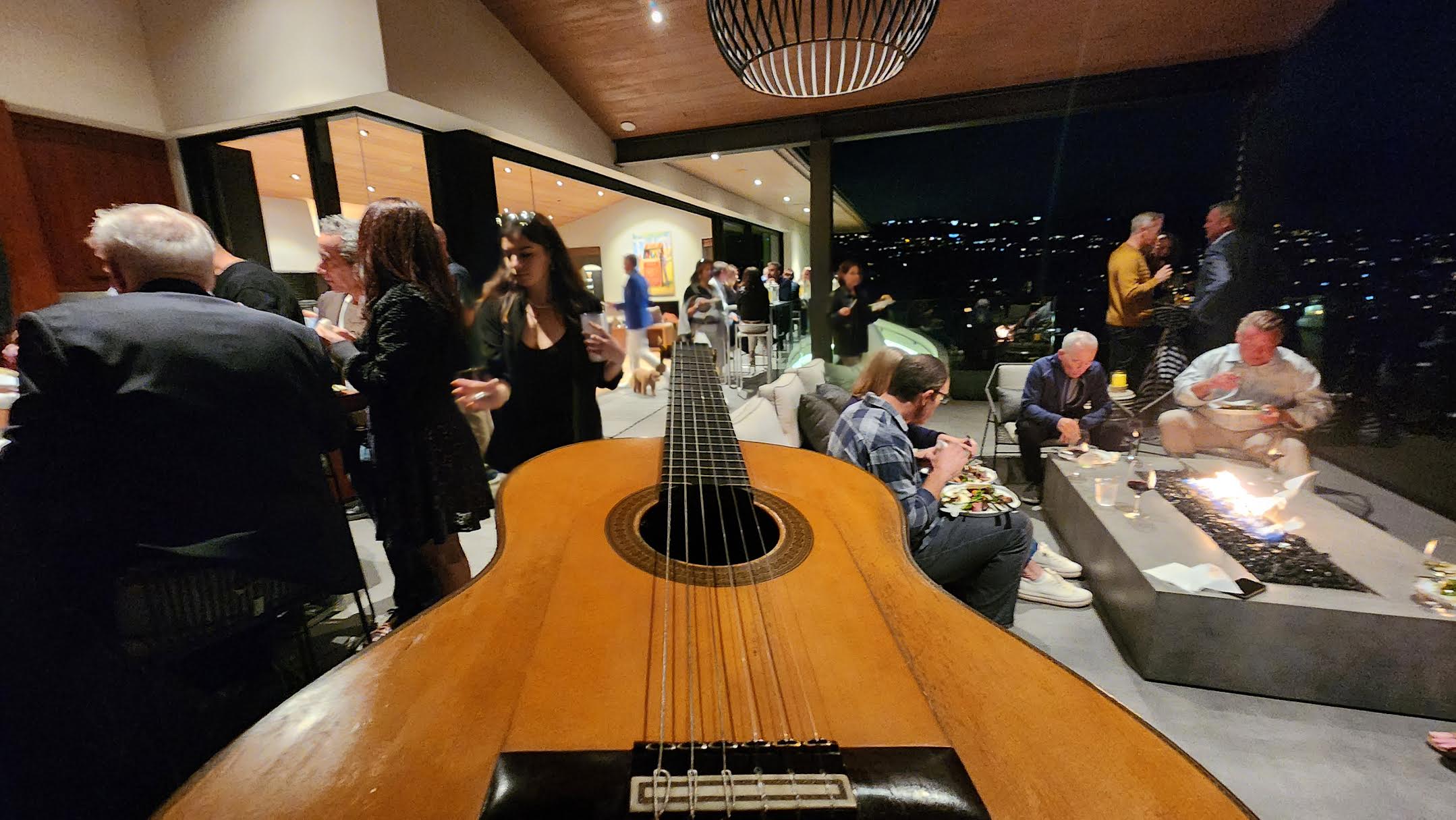
The single most common cocktail hour mistake is music that is too loud. A useful rule: guests standing a few steps from the musician should be able to talk at a normal speaking level. Outdoors, a little amplification is usually needed so the music reaches the edges of the space; indoors, especially in rooms with hard floors and high ceilings, the music should be softer than you expect because the room adds its own reverberation. I adjust the level throughout the hour, turning down as the crowd gets denser and conversation gets louder, rather than fighting it.
Placement matters too. Put the musician near, but not inside, the main gathering area, and not right next to the bar, where guests queue and need to talk to the bartender.
Hear a cocktail hour set: listen on SoundCloud or watch live clips on the LA Acoustic YouTube channel.
Live Music or a Playlist?
A playlist is cheap and easy, and for a casual party it can be fine. But it has real limits at an event. It cannot adjust when the room gets crowded, it cannot stretch when photos run long, and it occasionally throws in a song that feels wrong. A live musician also becomes part of the atmosphere: guests gather near the guitarist, ask about a song and remember the experience. For weddings especially, cocktail hour is when guests have the most time to notice the music, which is why so many couples tell me it was their favourite part of the day.
A solo guitarist is often the best value form of live cocktail music. It needs very little space, no stage and no extra power at many venues, and it costs far less than a band. If you are weighing up formats, I have set out the trade-offs in solo vs duo vs trio.
Indoor vs Outdoor Cocktail Hours
Outdoor cocktail hours are the norm in Southern California for much of the year, and they need a slightly different approach from indoor ones. Outside, sound drifts away, so a compact speaker placed near the guests keeps the music present. Shade matters for both guests and instrument, and in the late afternoon a breeze can pick up quickly near the coast. Inside, the room does the opposite: hard surfaces bounce sound around, so the music can quickly feel crowded. I keep indoor sets softer, use fewer strummed passages and favour bossa nova and jazz, which sit beautifully in reflective rooms.
Taking Requests During Cocktail Hour
Cocktail hour is when guests are most likely to wander over and ask for a song. With a live guitarist, that becomes a lovely moment rather than an interruption. I keep a broad repertoire ready, and if a request is not something I know, I suggest something close in mood. Hosts can also give me a short list of family favourites in advance, which I weave in when the right guests are nearby.
Cocktail Hour at Corporate Events and Parties
Corporate receptions have slightly different needs. Instrumental music is ideal because it avoids lyrics that might distract or offend, and it keeps networking conversations easy. Jazz and bossa nova are the safest choices; Spanish guitar adds warmth for client dinners and holiday parties. For private parties, the mood is often more personal, and a few of the host’s favourite songs mixed into the set make it memorable. My private party guitarist guide covers what hosts should plan.
A Simple Cocktail Hour Timeline
- Before guests arrive: the musician is set up and sound-checked.
- First 15 minutes: soft, welcoming music as guests collect drinks.
- Middle 30 minutes: the liveliest part of the set, with familiar songs and upbeat Spanish or Latin pieces.
- Final 15 minutes: the music settles, signalling that dinner or the main programme is near.
- Transition: the music fades as the host or coordinator calls guests in, or continues into dinner if booked.
What Cocktail Hour Music Costs
Booked by itself, an hour or so of live solo guitar with LA Acoustic usually lands between $400 and $700 in Southern California, sound included. At weddings, it is usually added to a ceremony booking, bringing the combined total to around $500 to $1,000, which is far less than booking the cocktail hour separately. My 2026 live guitarist cost guide has the full breakdown. To book, check my availability, or read more about my live guitarist service.
Frequently Asked Questions
What kind of music is best for cocktail hour?
Spanish guitar, bossa nova, jazz standards and instrumental versions of familiar pop and rock songs. They create atmosphere without competing with conversation, and they suit most venues and age groups.
How long is a typical cocktail hour?
Around 60 minutes at a wedding, though it often stretches to 75 or 90 minutes if photos run long. Corporate receptions can run from 45 minutes to two hours.
How loud should cocktail hour music be?
Quiet enough that guests a few steps from the musician can talk at a normal level. Indoors it should be softer than you expect; outdoors gentle amplification helps the music reach the edges of the space.
Should cocktail hour music have lyrics?
Instrumental music usually works best, because lyrics pull attention away from conversation. Instrumental versions of familiar songs give guests the fun of recognition without the distraction.
Where should the musician be placed during cocktail hour?
Near the main gathering area but not inside it, and not right beside the bar. That keeps the music present while leaving room for guests to talk and queue.
Is a solo guitarist enough for a large cocktail hour?
For most events up to a few hundred guests, yes, with a compact sound system. A solo guitarist needs little space and can move around the room’s mood more easily than a band.
Is it better to book cocktail hour music with the ceremony or separately?
Together, almost always. The setup is already in place, so adding cocktail hour to a ceremony costs much less than a separate booking, and the music flows from the recessional straight into drinks without a gap.
What does cocktail hour music cost on its own?
Live solo guitar for a stand-alone cocktail hour typically costs $400 to $700 with LA Acoustic, including sound. Added to a ceremony, the combined booking usually runs $500 to $1,000.
Is live music better than a playlist for cocktail hour?
For weddings and formal events, usually yes. A live musician adapts to the crowd and timing, never plays a wrong-feeling song and becomes part of the experience guests remember.
What music suits a corporate cocktail reception?
Instrumental jazz and bossa nova are the safest choices for networking, with Spanish guitar adding warmth for client dinners and holiday parties. Avoid lyrics and keep the volume at conversation level.
About the Author: Ian Kauffman is the solo guitarist behind LA Acoustic, performing Spanish, flamenco, classical, jazz and bossa nova guitar at weddings and private events across all nine Southern California counties. His approach is simple: one musician, one setup, one fee, with professional sound always included. Learn more about Ian or check your date.
Last Updated: October 2026 · Reading time: 10 minutes