

Searching for an acoustic duo, trio, or band for your Los Angeles or Orange County event? Here’s the honest answer most entertainment agencies won’t lead with: for the majority of weddings, cocktail hours, and private parties, a single professional guitarist delivers 90% of the sound at roughly half the cost — and fits venues a band never could. I’m Ian Kauffman, the solo guitarist behind LA Acoustic, and after years of playing rooms of every size across Southern California, this guide breaks down exactly when to book a duo, when a trio earns its fee, and when one musician is genuinely all you need.
Quick Answer: An acoustic duo in Los Angeles or Orange County typically costs $700–$1,800 for two hours; a trio or band runs $1,200–$3,500+. A professionally amplified solo guitarist covers the same events for $400–$1,500, needs one-third the space, and can move between ceremony, cocktail hour, and dinner without a band’s reset time. Book a duo or band when you specifically want vocals or a dance set — book solo for everything else.
Your Four Live Acoustic Options, Defined
Live acoustic entertainment in Southern California comes in four standard formats. A solo acoustic guitarist is one performer covering melody, rhythm, and bass on a single instrument, usually with discreet amplification. An acoustic duo pairs guitar with a vocalist, a second guitar, or light percussion. An acoustic trio adds a third element — most often cajón or upright bass. An acoustic band means four or more players and functionally becomes a small stage production.
Every step up that ladder adds texture — and also adds cost, space requirements, scheduling complexity, and points of failure. According to the broad definition of acoustic music, all four formats live in the same sonic family; the difference guests actually perceive is smaller than the difference your budget will feel.
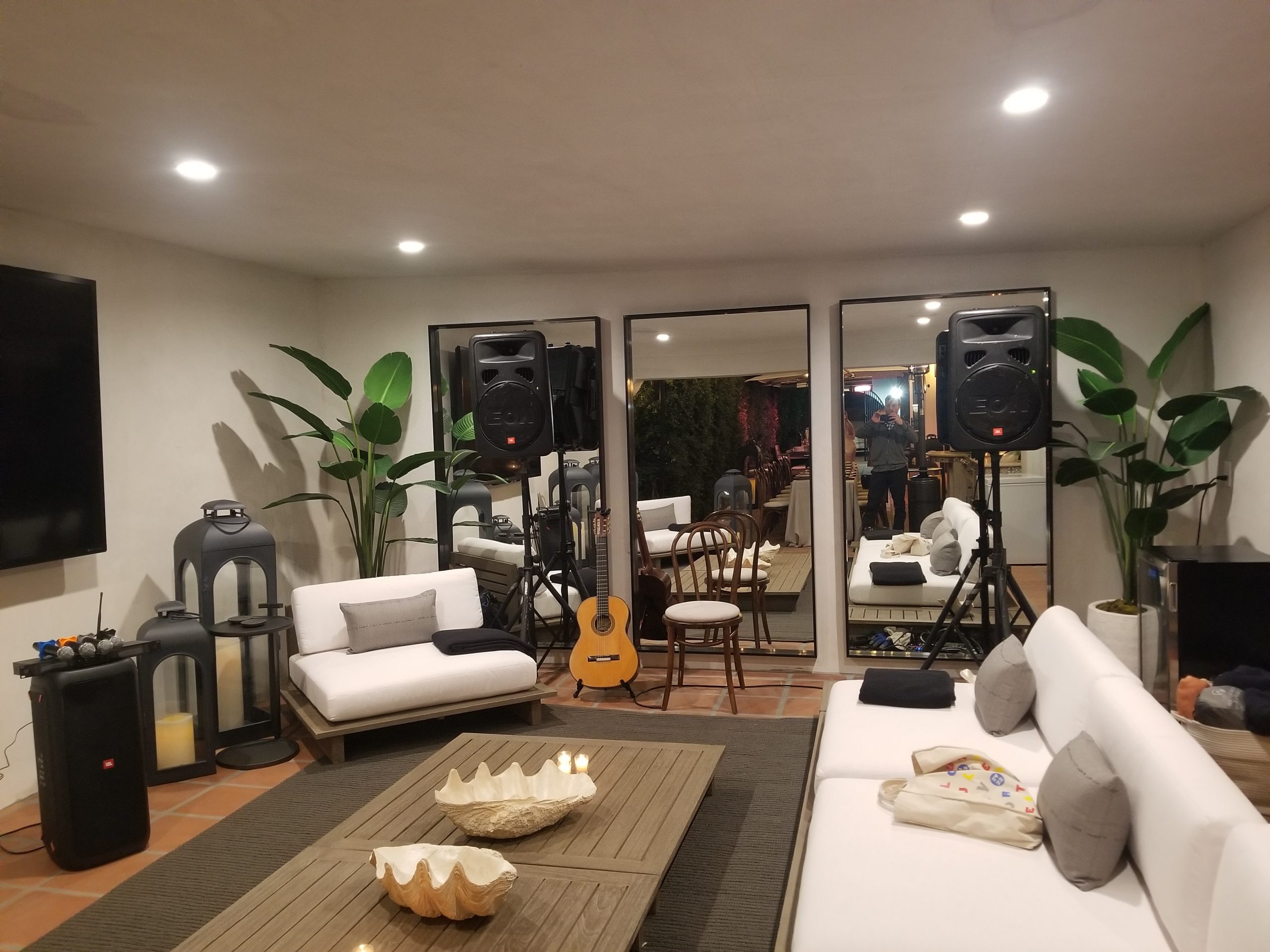
What Does an Acoustic Duo Cost vs. a Solo Guitarist?
In Los Angeles and Orange County, an acoustic duo generally quotes $700–$1,800 for a standard two-hour event, because you’re paying two professional day-rates plus shared equipment. A solo guitarist typically quotes $400–$1,500 all-inclusive. Trios and bands scale from $1,200 to well past $3,500 once you add players, sound reinforcement, and setup labor.
Here’s how the formats compare for a typical Southern California private event:
| Format | Typical 2-hr cost (LA/OC) | Space needed | Setup time | Best for |
|---|---|---|---|---|
| Solo guitarist | $400–$1,500 | ~6×6 ft, 1 outlet | ~30 min | Ceremonies, cocktail hours, dinners, intimate venues |
| Acoustic duo | $700–$1,800 | ~8×8 ft | 45–60 min | Vocal-forward cocktail sets, sing-along moments |
| Acoustic trio | $1,200–$2,500 | ~10×10 ft | 60–75 min | Larger receptions wanting a rhythm section |
| Acoustic band | $1,800–$3,500+ | 10×12 ft+, stage power | 60–90 min | Dance sets, festivals, large corporate stages |
For a full breakdown of what drives musician pricing in this region — date, travel, hours, and overtime — see my complete guide to the cost of hiring a live guitarist in Southern California.
Does More Musicians Mean Better Sound?
Not the way most people assume. Perceived volume comes from the sound system, not the head count — a solo performer with a quality PA fills a 150-guest reception as completely as a trio does. What extra musicians add is texture: a human voice, a walking bassline, a percussion groove.
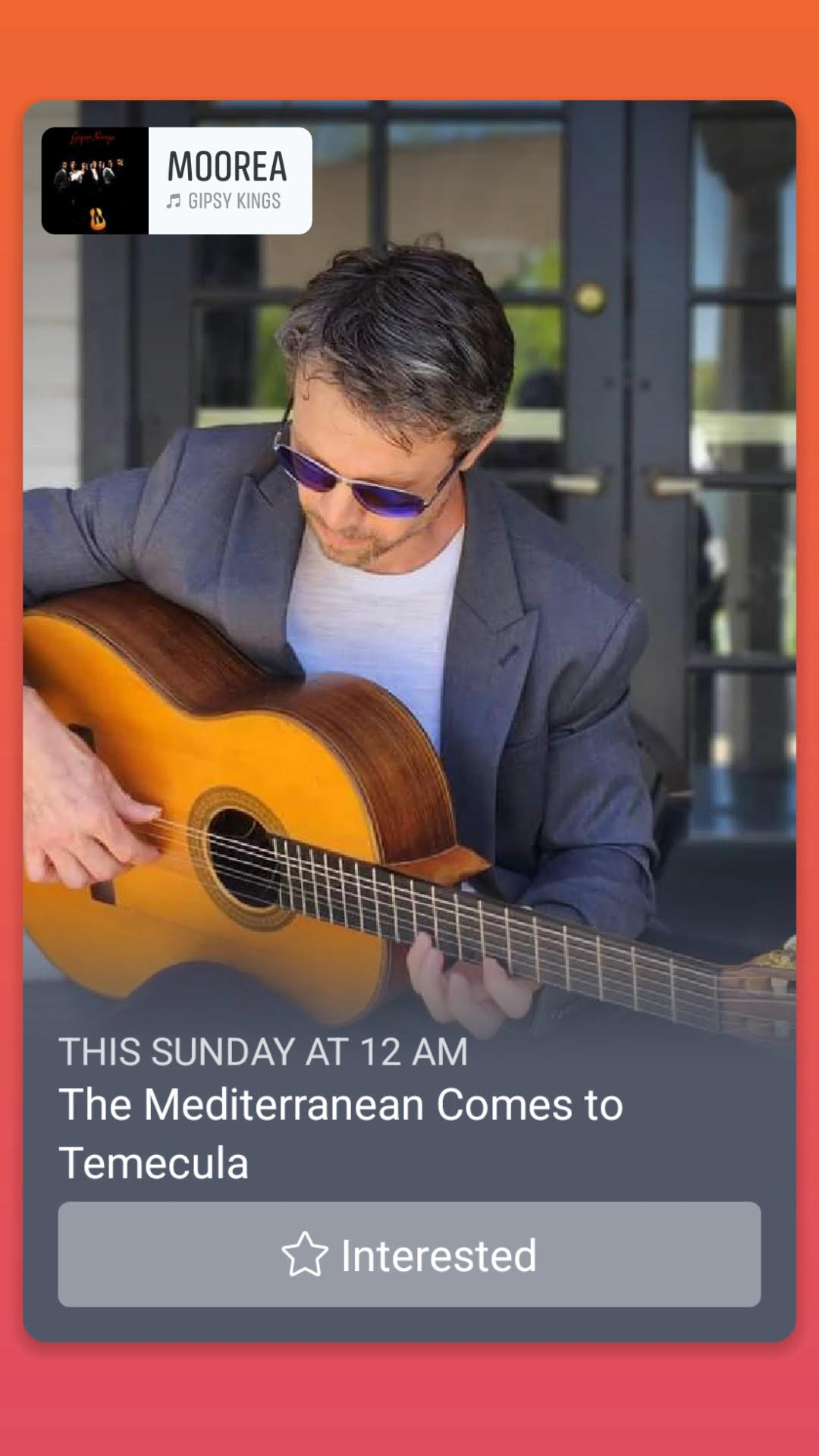
A skilled soloist compensates with technique. Modern fingerstyle guitar lets one player carry bassline, chords, and melody simultaneously, while Spanish and flamenco techniques add built-in percussion through the strumming hand. In my own sets I move between classical, Spanish, jazz, and acoustic-pop arrangements precisely so the sound never feels thin — you can hear that range in the performance gallery. If it’s the emotional case for live music you’re weighing, I’ve written about why a live guitarist makes events unforgettable compared with any playlist.
Space, Power & Venue Rules in LA and Orange County
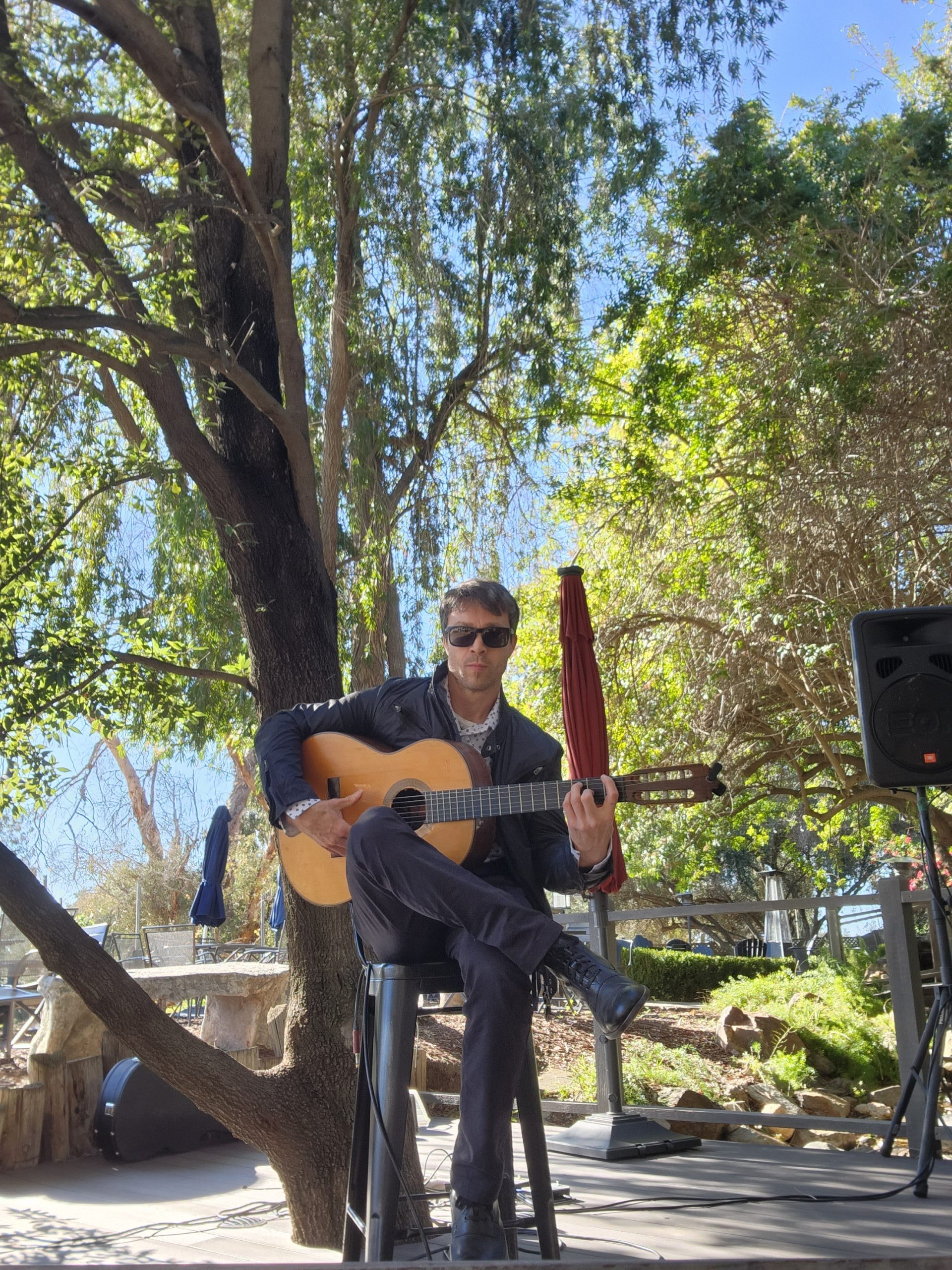
This is where solo quietly wins bookings. Many of the region’s most-loved venues — historic estates in Pasadena, rooftop lounges in Long Beach, winery patios in Temecula, beach clubs from Malibu to Laguna — have three constraints that punish larger acts: limited performance footprint, limited power, and strict noise ceilings enforced by local noise regulations.
A solo guitarist needs a six-foot corner, a single standard outlet, and about thirty minutes. A band needs staging area, multiple circuits, a load-in path for drums and amps, and up to ninety minutes on both ends of your event. If your celebration is at a private home or a boutique space anywhere from Los Angeles County to Orange County, ask the venue two questions before booking any act: what is the amplified-sound cutoff time, and how many performers have actually fit in the space before.
When a Duo, Trio, or Band IS the Right Call
I’m a soloist, but I’ll argue the other side honestly. Book more musicians when the specific thing extra players provide is central to your vision:
- You want live vocals. If guests singing along to “Brown Eyed Girl” at cocktail hour is the dream, a guitar-vocal duo delivers something instrumental guitar intentionally doesn’t.
- You’re building a dance floor on live music alone. A four-piece band with a rhythm section sustains a 90-minute dance set better than any solo instrument. (Many couples split the difference: solo guitar for ceremony and dinner, DJ for dancing.)
- The stage is the centerpiece. Corporate showcases, festivals, and large galas where the act is the featured attraction justify a fuller lineup.
- Your headcount tops ~250 in one open space. At that scale, visual presence matters as much as audio, and a bigger act reads better from the back of the room.
When a Solo Guitarist Wins
For the events that make up most real-world bookings — wedding ceremonies, cocktail hours, dinner receptions, anniversaries, proposals, corporate mixers, and house parties — solo guitar is the highest-value choice in Southern California. The reasons compound:
- One fee, no multiplication. Every dollar goes to one world-class player, not split three ways among average ones.
- Continuity across your whole event. The same musician plays your wedding ceremony, relocates in fifteen minutes, and carries cocktail hour and dinner — no silent gaps while a band tears down.
- Conversation survives. Acoustic guitar sits under dialogue instead of over it, which is why planners default to soloists for mingling-heavy events.
- Zero internal logistics. No band member running late, no replacement sub you’ve never heard, no group scheduling conflicts.
- Repertoire agility. One player pivots instantly — Spanish for golden hour, jazz for dinner, a pop request from your aunt — with no set list negotiated by committee.
That “one musician, one setup, one fee” model is exactly how I run every live guitarist booking at LA Acoustic across all nine Southern California counties — you can see the full coverage map on my service areas page.
Hear it before you book it: watch live performance clips on the LA Acoustic YouTube channel or listen to full tracks on SoundCloud.
How to Book the Right Act: A 6-Step Checklist
Whichever format fits, protect your event with this sequence:
- Confirm the venue’s sound rules first. Amplification cutoff time, decibel limits, and performer capacity decide half the choice for you.
- Listen to raw, live footage — not studio recordings. Any professional should have unedited clips; mine live on the gallery and YouTube.
- Get the quote itemized. Sound system, travel, setup time, and overtime rates should be in writing. All-inclusive quotes prevent day-of surprises.
- Ask the sickness question. For duos and bands: what happens if one member cancels? For soloists: what’s the backup-performer arrangement?
- Lock your date early. Peak Saturdays from April through October book four to eight months out across the Southern California live-music market.
- Share your top five songs and your top three “please don’t.” That short list shapes a set better than a fifty-song spreadsheet.
Frequently Asked Questions
How much does an acoustic duo cost in Los Angeles or Orange County?
Most Southern California acoustic duos quote roughly $700–$1,800 for a standard two-hour event, since you are paying two professionals plus shared sound. A comparable solo guitarist typically runs $400–$1,500 all-inclusive, which is why many hosts start solo and only scale up if the room truly needs it.
Is a solo guitarist loud enough for 100+ wedding guests?
Yes — volume comes from the PA system, not the number of musicians. A professionally amplified solo guitarist can comfortably cover ceremonies and receptions of 100–200 guests. What matters is that the performer brings a quality speaker rig and sets levels for the space, indoors or out.
What is the difference between an acoustic duo and an acoustic trio?
An acoustic duo is usually guitar plus one other element — a vocalist, second guitar, or cajón. A trio adds a third instrument, most often percussion or bass, for a fuller rhythm section. Each added member increases cost, space requirements, and setup time, but not necessarily elegance.
Do acoustic bands need more space and power than a solo musician?
Generally yes. A three-to-five-piece acoustic band typically wants a 10×12-foot performance area, multiple power circuits, and 45–90 minutes of setup. A solo guitarist needs about a 6×6-foot corner, one standard outlet, and roughly 30 minutes — a real advantage at private homes and boutique venues.
Can one guitarist cover both my ceremony and reception?
Absolutely, and it is one of the strongest reasons couples book solo. The same guitarist can play your processional, switch to Spanish or jazz for cocktail hour, and keep dinner warm — one contract, one sound check, no gaps while a band resets between locations.
Why do venues sometimes prefer solo musicians over bands?
Many Los Angeles and Orange County venues have noise limits, small load-in paths, or limited stage power. A solo acoustic act keeps decibels manageable, needs no drum kit, and clears the room fast. Some historic and residential-adjacent venues explicitly cap live music at one or two performers.
How far in advance should I book live acoustic music in Southern California?
For peak Saturday dates from April through October, book four to eight months ahead — good soloists and duos are often gone six months out. Off-season or weekday events can frequently be booked within four to six weeks, and last-minute requests are sometimes possible for solo acts.
Does a duo sound twice as full as a solo guitarist?
Not really. A skilled solo player uses fingerstyle technique, percussive strumming, and arrangement tricks to imply bass, rhythm, and melody at once. A duo adds texture — especially vocals — but the perceived difference is smaller than the price difference, which is often 60–100% higher.
What questions should I ask before booking an acoustic act?
Ask five things: Are you insured? Is sound equipment included in the quote? How many breaks do you take, and is recorded music played during them? Can I hear live, unedited clips? And what happens if a member is sick — a key risk for duos and bands that solo performers do not carry.
Can a solo guitarist take song requests like a band would?
Yes. Most professional soloists carry a repertoire of 150–300 songs across pop, Spanish, jazz, and classical styles, and will learn two or three special requests before your date. Because there is no band to rehearse, adding a specific song is usually faster and cheaper with one musician.
The Bottom Line: Match the Act to the Moment
An acoustic duo, trio, or band earns its price when vocals or a live dance set are the point. For everything else — ceremonies, cocktail hours, dinners, and the intimate celebrations Southern California does best — a professional solo guitarist gives you richer sound-per-dollar, fits any venue from a Brentwood living room to a Temecula vineyard, and removes every scheduling risk that comes with a roster. If you’re weighing options for a date in Los Angeles, Orange County, or anywhere in between, check your date with LA Acoustic — tell me the venue and the vibe, and I’ll tell you honestly whether one guitarist is your answer or whether your vision genuinely calls for more.
About the Author: Ian Kauffman is the solo guitarist behind LA Acoustic, performing Spanish, flamenco, classical, jazz and bossa nova guitar at weddings and private events across all nine Southern California counties. His approach is simple: one musician, one setup, one fee — with professional sound always included. Learn more about Ian or check your date.
Last Updated: September 2026 · Reading time: 11 minutes