
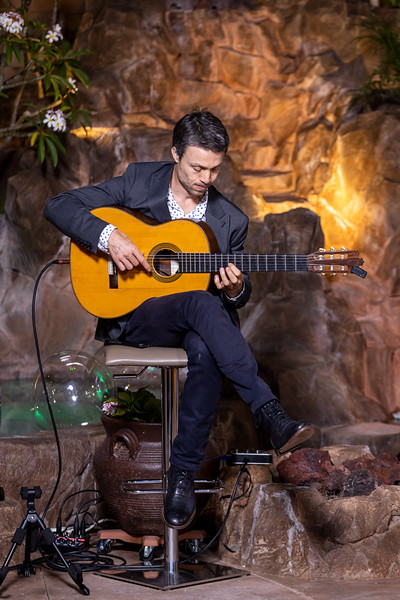

Few sounds set a mood faster than romantic Spanish guitar songs drifting across a candlelit table. I have been playing guitar professionally since 1977, and the requests that make couples lean closer together are nearly always Spanish or Spanish-language pieces: a Tárrega miniature, an old bolero a grandmother once danced to, a rumba that turns a quiet patio into a little party. This is my own working list of twenty-eight pieces, grouped by mood, with notes on where each one lands best, whether that is a wedding, an anniversary dinner or the moment someone drops to one knee.
What Makes Spanish Guitar Sound So Romantic
Part of the answer is the instrument itself. A Spanish guitar is strung with nylon rather than steel, and nylon gives a round, warm, slightly breathy tone, closer to a human voice than to a bright folk guitar. Played with bare fingertips and nails, every note can be shaded from a whisper to a ring, which is exactly what a love song needs.
The second part is harmony. Much of the Spanish repertoire leans on the Andalusian cadence, a descending run of four chords that sounds both sad and proud at once. Your ear hears longing in it even if you have never heard the piece before. Boleros borrow a softer, jazzier set of chords, yet they keep that same ache.
The third part is technique. Tremolo, where one finger after another strikes a single string so quickly that a melody seems to float, gives pieces like Recuerdos de la Alhambra their shimmering quality. Rasgueado, the fan-like flamenco strum, does the opposite and adds fire. A good romantic set uses both, so the evening has quiet sighs and bright sparks. The flamenco tradition that feeds so much of this music is recognised by UNESCO as intangible cultural heritage, and you can hear why the moment a guitarist digs into a rumba.
Classical Spanish Pieces (1–8)
These concert works were written or adapted for the guitar by Spanish and Cuban composers. They suit quiet, elegant moments and sound beautiful in photographs and video years later.
- Spanish Romance (anonymous): the arpeggio pattern every guitar student dreams of playing, moving from a wistful minor half into a glowing major half.
- Recuerdos de la Alhambra (Francisco Tárrega): a continuous tremolo melody inspired by the palace in Granada; delicate enough to make a room fall silent.
- Lágrima (Tárrega): the title means “teardrop,” and in under two minutes it moves from sweetness to sorrow and back.
- Adelita (Tárrega): a tiny mazurka with a gentle sway, charming during a toast or the cutting of the cake.
- Capricho Árabe (Tárrega): a slow, exotic introduction gives way to a lyrical serenade with Moorish colour.
- Asturias (Leyenda) (Isaac Albéniz): written for piano and now owned by the guitar; dramatic, pulsing and best saved for a moment that needs a flourish.
- Spanish Dance No. 5, “Andaluza” (Enrique Granados): a melancholy melody over a steady pulse, deeply Spanish and surprisingly tender.
- Malagueña (Ernesto Lecuona): grand and passionate, with a famous rising theme; on solo guitar I play a calmer version for dinner and a fuller one for a big entrance.
If concert repertoire is what draws you, my page on booking a classical guitarist explains how I build a set around it.
Boleros: The Language of Old-Fashioned Romance (9–16)
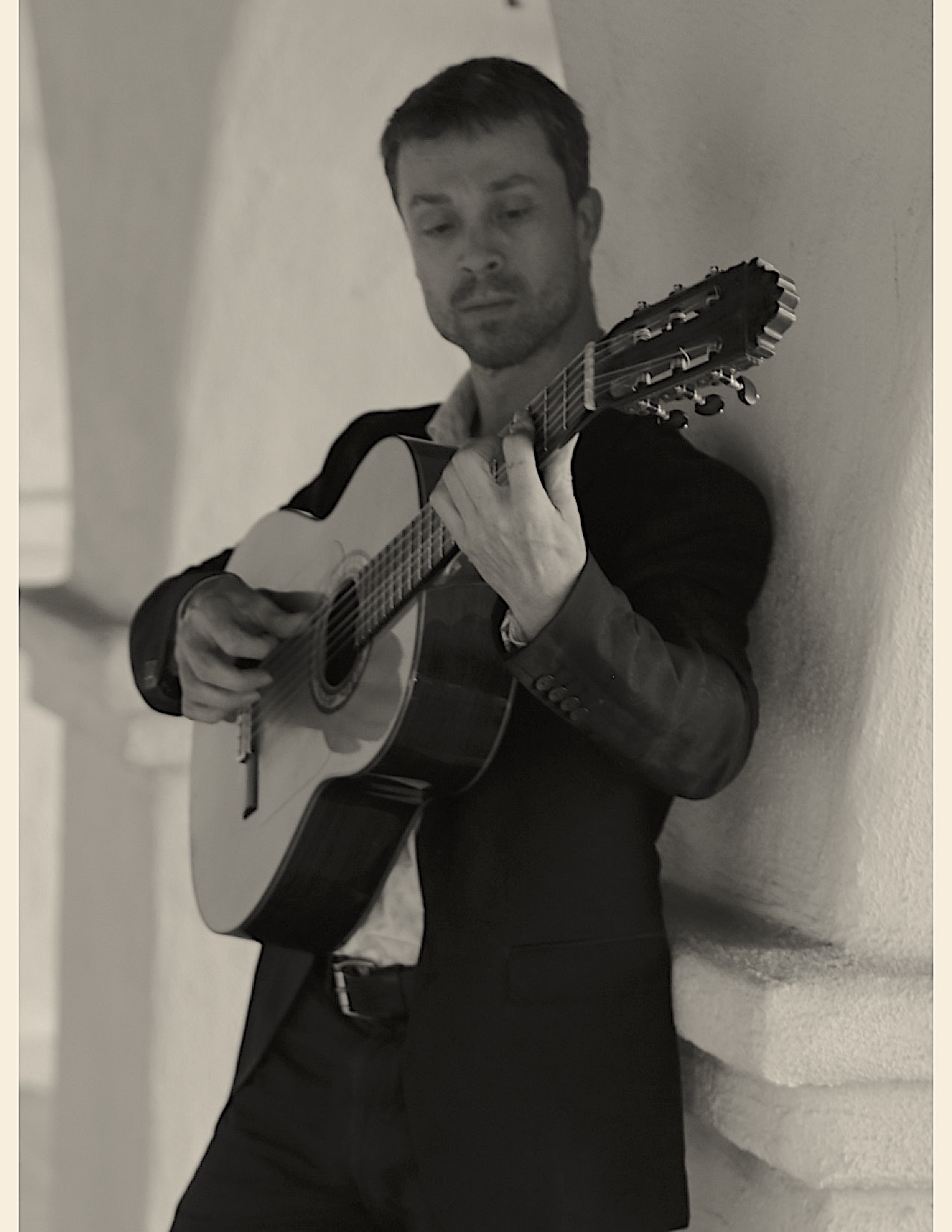
The bolero is a slow love song from Cuba and Mexico, and for many families it is the soundtrack of courtship. These are written to be sung, but their melodies are so strong that they stand on their own when the guitar carries the tune.
- Bésame Mucho (Consuelo Velázquez): perhaps the most recorded Spanish-language song ever; guests of every age hum along.
- Sabor a Mí (Álvaro Carrillo): soft and intimate, made for a slow dance in the corner of a patio.
- Contigo en la Distancia (César Portillo de la Luz): a Cuban classic about love that survives being apart, with lovely jazz-tinged chords.
- Historia de un Amor (Carlos Eleta Almarán): bittersweet and cinematic, a favourite of older guests.
- Solamente Una Vez (Agustín Lara): a declaration that you love only once; ideal for vow renewals.
- Somos Novios (Armando Manzanero): simple, sincere and familiar to many English speakers as “It’s Impossible.”
- Quizás, Quizás, Quizás (Osvaldo Farrés): light and playful, with a smile in the melody.
- Perfidia (Alberto Domínguez): moody and elegant; it works well as dinner winds down.
Flamenco-Style and Rumba (17–21)
When the room is ready for energy, rumba is the answer. It keeps the Spanish flavour but adds a rhythm that makes guests tap the table. I play these flamenco-style on solo guitar, with percussive strums standing in for the clapping a full group would add.
- Entre Dos Aguas (Paco de Lucía): the rumba that took flamenco guitar to the wider world; hypnotic, cool and sophisticated.
- Bamboleo (Gipsy Kings): the instant party starter, ideal for a grand exit or the last stretch of a celebration.
- Volare (Domenico Modugno, in the rumba style): an Italian song that Spanish guitar adopted long ago and never gave back.
- Inspiration (Gipsy Kings): a flowing instrumental that sits between romance and celebration, perfect as dessert arrives.
- Un Amor (Gipsy Kings): a slower rumba ballad, warmer than the party numbers and still full of rhythm.
For a deeper look at the flamenco side of my work, see the page on flamenco-style acoustic guitar.
Tango (22–24)
Tango is romance with a raised eyebrow: passionate, a little dangerous and very elegant. On solo guitar it brings theatre to a formal dinner without needing dancers.
- Por una Cabeza (Carlos Gardel): the tango from countless film scenes; it builds from a sly opening to a soaring final phrase.
- La Cumparsita (Gerardo Matos Rodríguez): the tango almost everyone recognises within two bars.
- El Choclo (Ángel Villoldo): playful and strutting, great for a lively dinner with a sense of humour.
Spanish-Language Love Songs on Instrumental Guitar (25–28)
Many couples want a song from their own lives rather than a concert piece. These modern and mid-century favourites arrange beautifully for one guitar:
- Contigo Aprendí (Armando Manzanero): a gentle song of gratitude that suits a toast to a partner.
- Burbujas de Amor (Juan Luis Guerra): tender and witty; slowed down it becomes a lovely first-dance alternative.
- La Bikina (Rubén Fuentes): a sweeping Mexican melody that older relatives often sing under their breath.
- Cucurrucucú Paloma (Tomás Méndez): haunting and dramatic, best for a reflective moment after dinner.
Hear these pieces live: listen on the LA Acoustic SoundCloud, watch performance clips on the YouTube channel, or browse event photos in the gallery.
The Best Spanish Picks for a Wedding
At a wedding, I treat the Spanish pieces as colours rather than a whole palette. A ceremony usually wants calm, so Spanish Romance or Recuerdos de la Alhambra makes a lovely backdrop as guests take their seats, and Lágrima or Adelita can cover a unity candle or a signing. For the walk back down the aisle, a rumba such as Bamboleo flips the mood from tears to cheers in a single bar.
Cocktail hour is where boleros shine. Families hear Bésame Mucho or Sabor a Mí and start telling stories about their own weddings. If your reception has a grand entrance, Malagueña or Asturias gives it real presence. My page on ceremony guitar covers timing and setup, and the wedding guitarist service page explains how ceremony, cocktail hour and dinner fit together.
The Best Spanish Picks for a Dinner Party
A dinner party has a natural arc, and the music should follow it. While guests arrive and find a drink, I keep things relaxed with Capricho Árabe, Contigo en la Distancia and Inspiration. Once everyone sits down, I lower the volume and lean on boleros and slower Tárrega pieces, because conversation is the main event and the guitar should feel like candlelight rather than a spotlight. When plates are cleared and the wine is flowing, the tangos and rumbas come out: Por una Cabeza, El Choclo, Entre Dos Aguas, and if the host gives me the nod, Bamboleo.
For a home or garden party, I bring a quiet battery-powered PA, so there is no hunting for an outlet and no cables across the lawn. You can read more about the setup on my private party guitarist page.
Proposals, Anniversaries and Vow Renewals
A proposal is one short moment that needs to be perfect, so I plan it carefully with the person asking. Usually I play something soft as the couple arrives, often Spanish Romance or Sabor a Mí, then move into the chosen song at a signal we agree on in advance: a hand on a shoulder, a glance, a text. Bésame Mucho and Solamente Una Vez are reliable choices because they are instantly romantic even to someone who does not know the title. After the yes, a bright rumba lets everyone breathe and celebrate.
Anniversaries and vow renewals often call for the song from the original wedding. If that was a bolero, it fits perfectly; if it was an English-language pop song, I can play it alongside the Spanish set. For a fortieth or fiftieth anniversary, Historia de un Amor and Contigo Aprendí tend to bring the room to a hush.
Song, Mood and Best Moment at a Glance
| Song | Mood | Best moment |
|---|---|---|
| Spanish Romance | Tender, wistful | Ceremony seating or proposal arrival |
| Recuerdos de la Alhambra | Shimmering, dreamy | Guests arriving, quiet signing |
| Lágrima | Bittersweet | Memorial candle or reflective toast |
| Asturias (Leyenda) | Dramatic, bold | Grand entrance |
| Bésame Mucho | Warm, nostalgic | Cocktail hour or proposal song |
| Sabor a Mí | Intimate | Slow dance or anniversary dinner |
| Contigo en la Distancia | Smooth, jazzy | Dinner service |
| Por una Cabeza | Elegant, theatrical | After the main course |
| Entre Dos Aguas | Cool, hypnotic | Late cocktail hour |
| Bamboleo | Joyful, high energy | Recessional or final set |
How to Choose Your Spanish Songs
Pick one anchor song. Choose the single piece that matters most to you, whether it is your proposal song or the bolero your parents danced to, and let me build around it.
Think in moods, not titles. Tell me where you want the evening to feel tender and where you want it to sparkle. I will fill the gaps with pieces in the right key and tempo so the set flows instead of jumping around.
Consider your guests. A room with several generations loves boleros. A younger crowd tends to light up for rumba. A mixed crowd enjoys both, in that order.
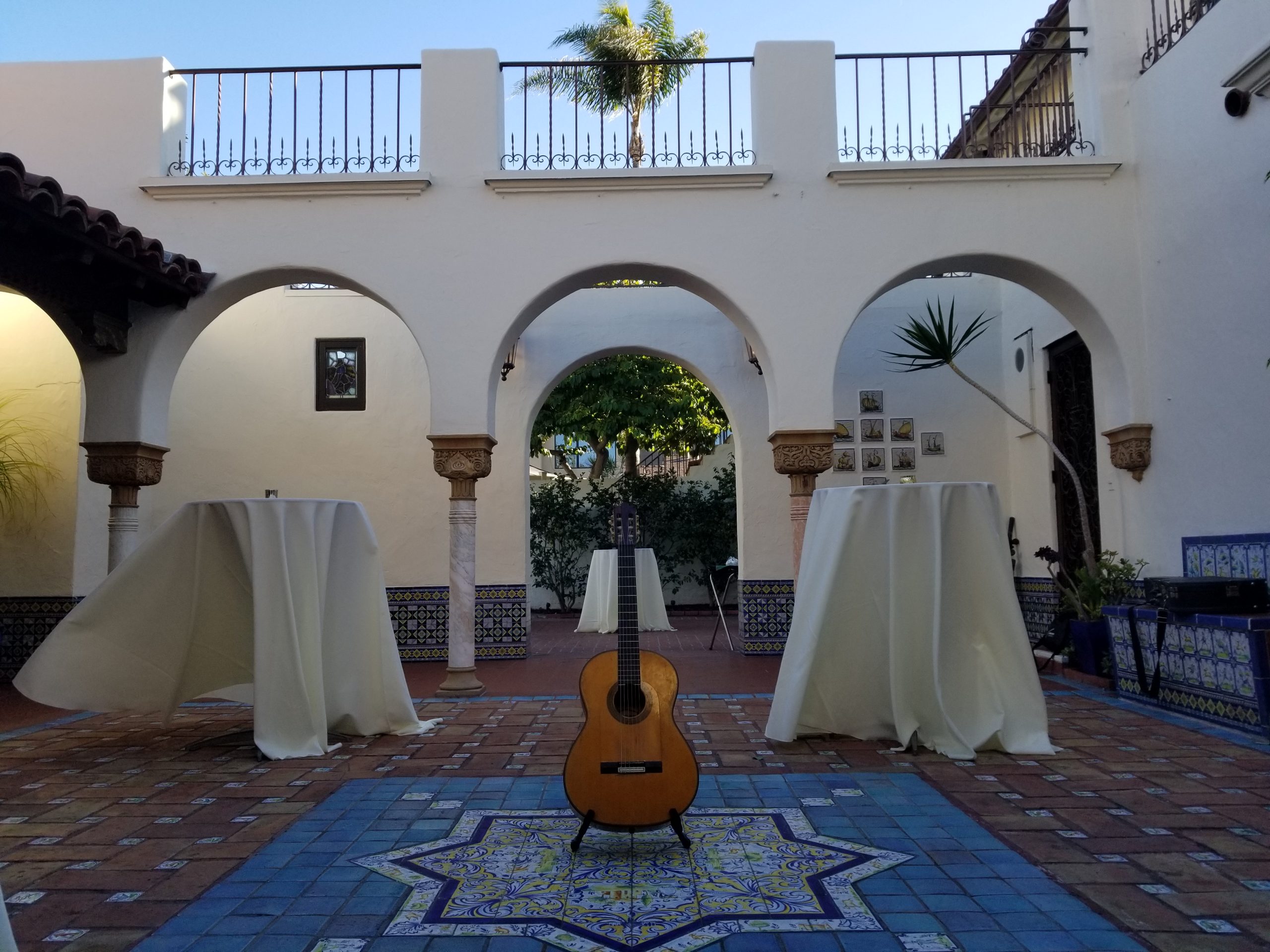
Match the setting. A Spanish-revival courtyard, a vineyard terrace or a stone patio all suit this music naturally, but even a modern dining room warms up with a little Tárrega.
Do not worry about language. Since I play instrumentally, guests who do not speak Spanish simply hear a beautiful melody, while those who know the words feel them anyway.
How a Solo Guitarist Arranges Your Requests
I play every set alone and without vocals, so each request is arranged for one instrument. In practice, that means placing the sung melody on the higher strings, a bass line underneath with my thumb, and the harmony filled in between. For a bolero, I often play the verse plainly the first time, then add ornaments and a little tremolo on the repeat so it never feels like a karaoke track missing its singer.
If a song is not yet in my repertoire, send it about four to six weeks ahead. I will write an arrangement, practise it until it sounds natural, and confirm where it falls in the evening. If you want a specific transition, such as moving from a bolero straight into a rumba as dessert arrives, mention it during planning and I will build the change into the set.
My Spanish repertoire sits alongside classical, jazz, bossa nova and acoustic pop, so a romantic evening can wander into other styles whenever you like. The Spanish guitarist page has more on that side of my playing, guests in Orange County can see the Orange County flamenco page, and you can read more about me and my background.
What a Romantic Spanish Guitar Set Costs
With LA Acoustic, a ceremony usually costs $400 to $700, a private party or dinner of one to three hours runs $400 to $1,200, and full wedding coverage tops out around $1,500. Sound is always included. The 2026 cost guide for hiring a live guitarist breaks this down further. Once you have a few favourites from this list, send me your date and we can start shaping the set.
Frequently Asked Questions
Which Spanish guitar piece is considered the most romantic?
Spanish Romance is the piece most people name, thanks to its tender minor-to-major shift. Recuerdos de la Alhambra and Lágrima by Tárrega are close behind for listeners who love a more delicate sound.
Is flamenco too intense for a romantic dinner?
Full-strength flamenco can be, but flamenco-style rumbas such as Entre Dos Aguas and Inspiration are smooth enough for dinner. I keep the fiery pieces for after the main course, when guests are ready for energy.
Do boleros still feel romantic without a singer?
Yes. Bolero melodies are so well known that guests often hear the words in their heads. On guitar the tune sings on the top strings, and many listeners find the instrumental version even more intimate.
What Spanish guitar music suits a surprise proposal?
Something soft while you arrive, such as Spanish Romance, then a recognisable love song at your signal. Bésame Mucho and Solamente Una Vez are popular choices, followed by a bright rumba once the answer is yes.
How long should a Spanish guitar set run at a dinner party?
Two hours suits most dinner parties: about thirty minutes for arrivals, an hour through the meal and a final stretch for dessert and conversation. Shorter gatherings work well at ninety minutes.
Will guests who do not speak Spanish enjoy these songs?
Absolutely. Every piece is played instrumentally, so there are no lyrics to translate. Guests hear warm, expressive melodies, while Spanish speakers recognise the songs and often hum along.
Can Spanish pieces be mixed with bossa nova or jazz in one evening?
Yes, and it often makes the night richer. Bossa nova and boleros share a relaxed feel, so moving between them is seamless. I plan the order so changes of style feel natural.
Why does the Andalusian cadence sound so emotional?
It is a descending four-chord pattern that lands somewhere unresolved, so the ear feels both longing and pride. It runs through countless Spanish and flamenco pieces and gives them their unmistakable ache.
Is a nylon-string guitar loud enough for an outdoor patio?
On its own, not always. That is why I bring a compact battery-powered PA, which lets the warm nylon tone reach every table without sounding harsh or overpowering conversation.
How do I request a Spanish love song that is missing from this list?
Send the title and a recording link a month or more before your event. I will arrange it for solo guitar, keep the melody recognisable and let you know where it fits best in the evening.
About the Author: Ian Kauffman is the solo guitarist behind LA Acoustic, performing Spanish, flamenco, classical, jazz and bossa nova guitar at weddings and private events across all nine Southern California counties. His approach is simple: one musician, one setup, one fee, with professional sound always included. Learn more about Ian or check your date.
Last Updated: October 2026 · Reading time: 10 minutes