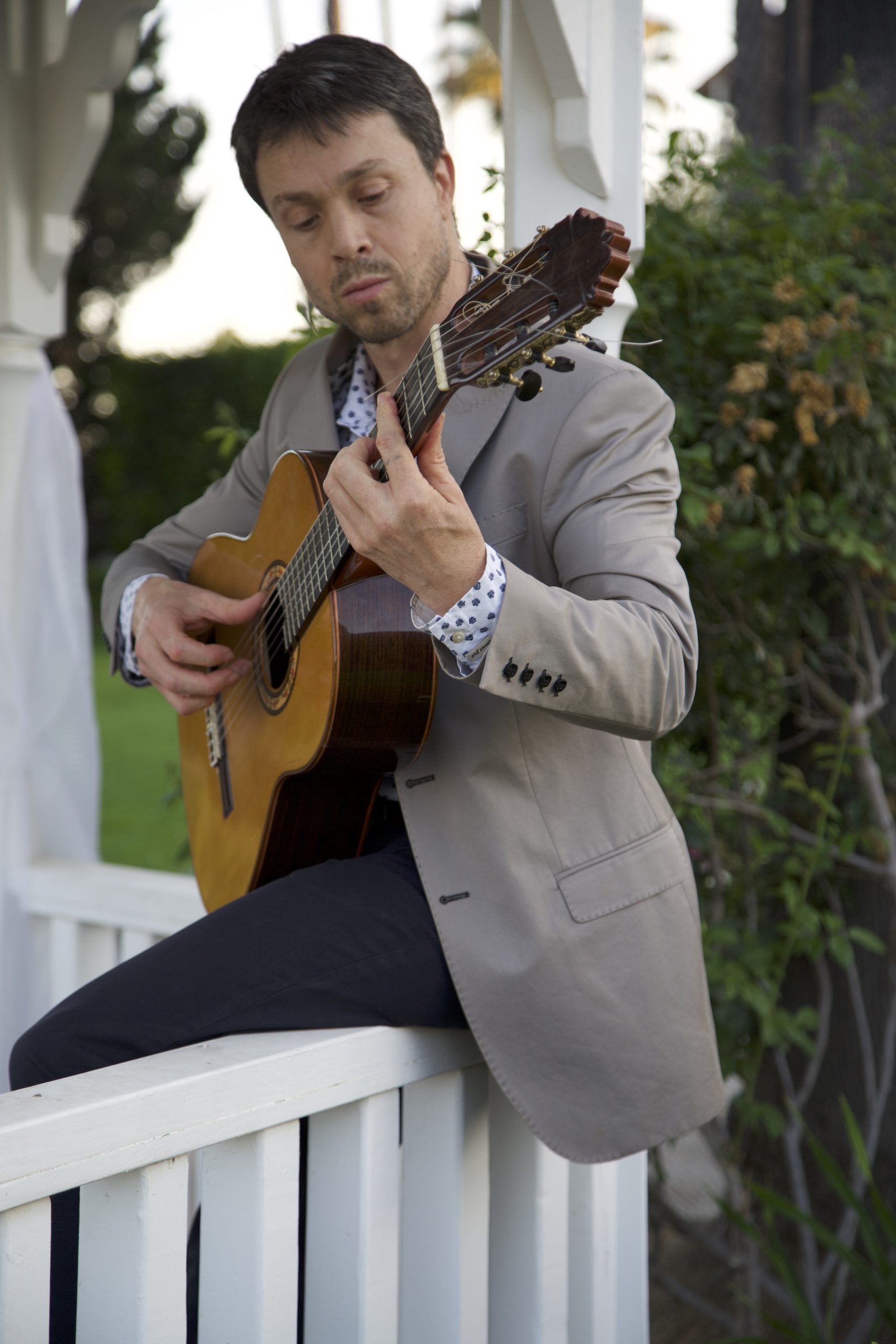
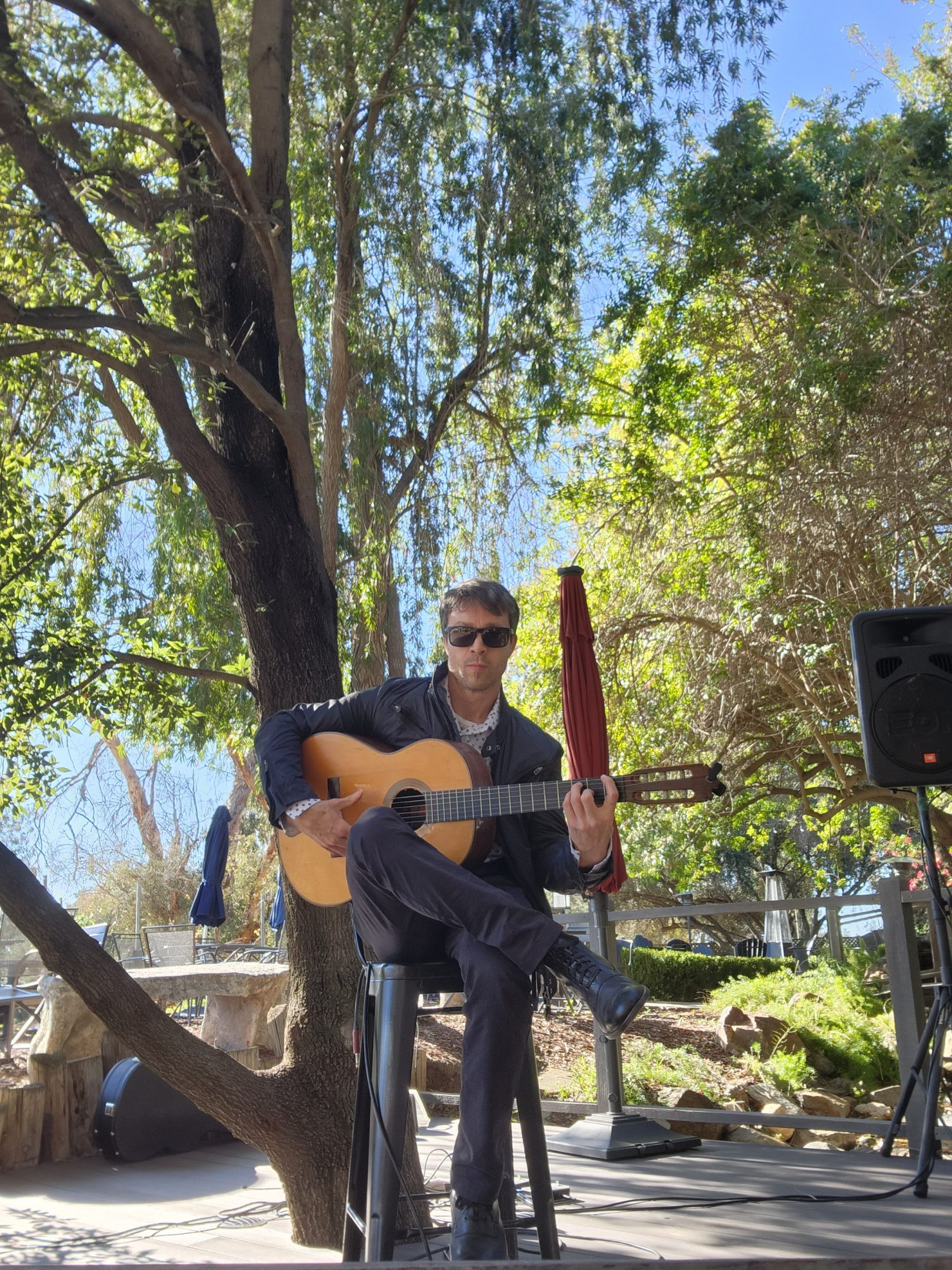
Couples planning their ceremony music quickly run into three words: prelude, processional and recessional. They sound formal, but the idea is simple. The prelude welcomes your guests, the processional brings in you and your wedding party, and the recessional sends you out married. I perform all three for LA Acoustic at weddings across Southern California every season, and this guide explains each part, compares them side by side and gives you guitar pieces that work for every moment.

The Three Parts at a Glance
| Prelude | Processional | Recessional | |
|---|---|---|---|
| When | As guests arrive, before the ceremony begins | As the wedding party and couple walk in | Right after the pronouncement and kiss |
| Length | 20–30 minutes | 3–6 minutes in total | 1–3 minutes, plus a postlude if wanted |
| Number of pieces | About 6–10 pieces | 1–2, sometimes 3 | 1 |
| Mood | Calm, welcoming, unobtrusive | Emotional, graceful, anticipatory | Joyful, upbeat, celebratory |
| Guests are | Finding seats and chatting | Standing and watching | Cheering and following you out |
| Guitar favourites | Bach, Spanish Romance, bossa nova, soft love songs | Canon in D, Air on the G String, a chosen love song | Wedding March, a happy pop song, a Spanish rumba |
The Prelude: Setting the Mood
The prelude starts when the first guests reach their seats, usually twenty to thirty minutes before the time printed on your invitation. Its job is to welcome people, cover the sound of chairs and conversation, and quietly tell everyone that something special is about to happen. Prelude music should never demand attention. Guests are greeting each other, signing the guest book and finding a seat, so the music should feel like a warm room rather than a performance.
On guitar, I usually build the prelude from gentle classical pieces, softer Spanish melodies, bossa nova and instrumental versions of love songs, often including one or two of the couple's favourites so that guests who are paying attention catch a personal touch. As the start time approaches, I make the music slightly more expressive, which naturally draws attention to the front and helps the officiant settle everyone.
Prelude tips
- Plan for the prelude to start before the first guests arrive, not when the last ones do.
- Choose a style rather than a strict song list; your guitarist can then stretch or shorten it to match arrivals.
- If the ceremony is running late, the prelude simply continues. Live music makes delays invisible.
The Processional: The Walk Down the Aisle
The processional is the emotional heart of the ceremony music. It usually has two parts. The first piece accompanies the wedding party: parents, grandparents, bridesmaids, groomsmen, the flower girl and ring bearer. The second, often a different piece, is reserved for the couple's entrance, or for whichever partner walks last. Some couples walk in together to one piece; others enter separately with their own songs.
This is where live guitar has a huge advantage over a recording. Every aisle is a different length, and every wedding party walks at its own pace. I watch the procession and repeat or shorten phrases so that the music lands at a natural ending exactly when the last person arrives. When your coordinator signals your entrance, I move into your chosen piece at a moment that sounds intentional, not like a track being skipped.
Traditional processional choices include Pachelbel's famous Canon, two Bach chorales and orchestral airs, and Wagner's Bridal Chorus, the tune many people know as "Here Comes the Bride." Contemporary couples often choose a love song from their own story, arranged for solo guitar.
Between the Two: Interlude and Signing Music
Many ceremonies include a moment in the middle when music is needed: lighting a unity candle, a sand ceremony, a handfasting or signing the marriage licence. This interlude usually lasts two to five minutes. Soft, reflective pieces work best, and the music should end gracefully when the moment does. Tell your guitarist about these rituals in advance so the timing is planned and the officiant knows the cue.
The Recessional: Walking Out Married
The recessional is pure celebration. The officiant pronounces you married, you kiss, the guests cheer, and the music should burst in with joy as the two of you head back up the aisle. Unlike the processional, it does not need to be long or carefully timed, but it does need to start instantly. I watch the officiant closely and begin on the kiss, not a second later.
The classic choice is Mendelssohn's Wedding March, which works brilliantly on guitar. Many couples prefer an upbeat pop song, a happy classic such as "Here Comes the Sun," or a lively Spanish rumba that sends guests straight into celebration mode.
After the Ceremony: The Postlude
Once the couple has left, guests follow row by row, and the room should not fall silent. The postlude is a few minutes of light, cheerful music while everyone moves toward cocktail hour. If I am also playing your cocktail hour, I simply carry on and then move to the cocktail area, often arriving before the first guests do.
How Traditions Change the Order
The three-part structure is common to most Western ceremonies, but the details vary. In a Catholic wedding mass there are extra musical moments, such as the offertory and communion, and the church may have rules about which music is allowed. In many Jewish ceremonies, both sets of parents walk the couple down the aisle and the chuppah becomes the focus, so the processional often has more stages. Civil and non-religious ceremonies are usually the most flexible, which makes them ideal for personal song choices. If your ceremony blends cultures or faiths, share the order of service with me early and I will map the music to each step.
A Sample Ceremony Running Order
- Prelude: 25 minutes of soft classical, Spanish and acoustic pieces as guests arrive.
- Processional: Canon in D for the wedding party, then your chosen love song for your entrance.
- Interlude: a quiet piece during the signing or unity ritual.
- Recessional: the Wedding March or an upbeat favourite on the kiss, followed by a cheerful postlude.
Common Mistakes to Avoid
- Choosing a processional that is too short: live music fixes this, but a recording will cut off mid-aisle.
- Forgetting the prelude: a silent room while guests sit for twenty minutes feels awkward.
- A slow recessional: the end of the ceremony should feel like a release of joy.
- No cue plan: agree in advance who signals each change, usually the coordinator.
Does Live Guitar Cost More for the Full Ceremony?
All three parts are covered by a single ceremony booking. With LA Acoustic, a ceremony including prelude, processional, interlude and recessional generally falls in the $400 to $700 range, with sound and planning included. If you add cocktail hour or dinner, the total scales up from there. My 2026 guitarist pricing guide has the full breakdown.
Plan Your Ceremony Music With Me
Once you know which moments you need, the rest is simply choosing pieces you love. My article on booking a guitarist for your ceremony covers setup and logistics, and my checklist of questions to ask a wedding guitarist helps you compare musicians. You can hear ceremony pieces in my gallery, read about my experience, explore my wedding guitarist service, or check your date to start planning.