An unplugged wedding ceremony sounds romantic: no cables, no speakers, just a guitar and your vows. Sometimes it is exactly right. Other times, the ocean, the wind or simply the size of the crowd means half your guests never hear the music. I play ceremonies both ways for LA Acoustic, and I decide with each couple based on the venue rather than on habit. This guide compares amplified and fully acoustic setups so you can make the call with confidence.
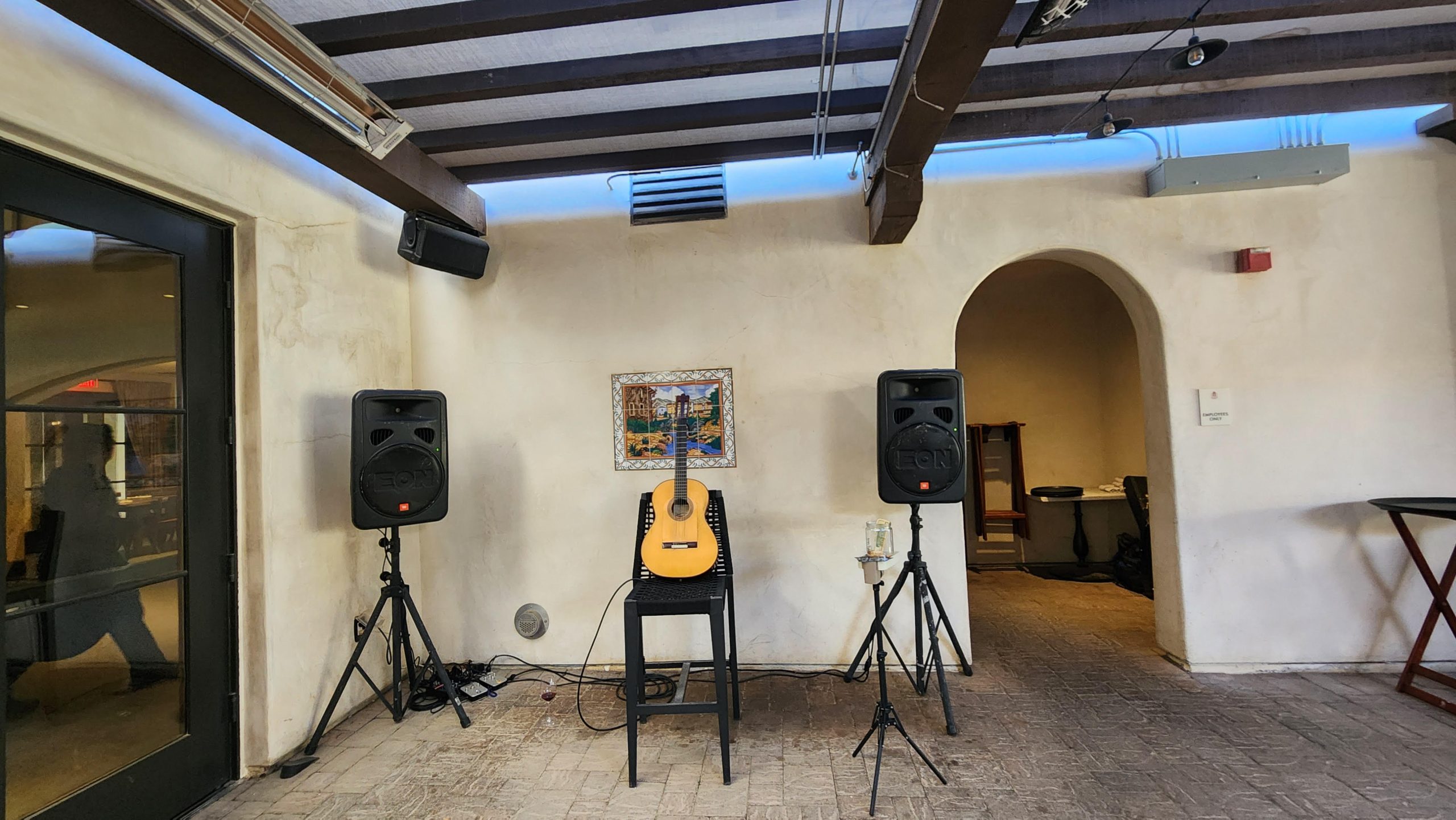
First, What Does "Unplugged" Mean?
The phrase is used in two ways, and it helps to separate them.
- A phone-free ceremony: most of the time, an "unplugged wedding" means the couple asks guests to put away phones and cameras so everyone is present and the photographer has a clear view.
- Acoustic-only music: it can also mean live music with no amplification at all, the way musicians use "unplugged" for an acoustic performance.
The two often go together, and they suit each other well. A phone-free ceremony is quieter and more focused, which makes it easier for live guitar to be heard. This page focuses on the music side, amplified versus fully acoustic, and the section near the end explains how live music supports a phone-free ceremony.
How Sound Actually Travels at a Ceremony
A guitar is a quiet instrument. A classical guitar, in particular, is designed for intimate rooms. Outdoors, its sound spreads in every direction with nothing to reflect it, and loudness falls off quickly with distance. Under the inverse-square law, every time you double the distance from a sound source in open air, the level drops by about six decibels. In practice, guests in the front rows hear the guitar clearly, while guests twelve rows back may hear only fragments, especially if there is a breeze, a fountain or traffic nearby.
Gentle amplification fixes this without making anything loud. A small speaker placed beside or slightly behind the guests evens out the sound, so the person in the last row hears roughly what the person in the first row hears.
Amplified vs Unplugged: Side by Side
| Factor | Fully unplugged | Gently amplified |
|---|---|---|
| Best guest count | Up to roughly 50 | Any size, essential above about 75 |
| Best venues | Chapels, small rooms, sheltered courtyards | Lawns, beaches, bluffs, large rooms, vineyards |
| Wind and surf | Sound gets lost quickly | Stays clear when speakers are well placed |
| Background noise | Struggles against fountains, traffic or crowds | Rises gently above noise |
| Look in photos | No visible equipment at all | One small speaker, placed discreetly |
| Setup needed | Just a chair and a quiet spot | Battery or mains power, a few minutes of setup |
| Price with LA Acoustic | The same. Sound equipment is always included. | |
When a Fully Unplugged Ceremony Works Beautifully
Acoustic-only guitar can be magical in the right setting. Guests hear the true, natural tone of the instrument, there is nothing between the music and the moment, and the photos show nothing but people and flowers. It works best when:
- The guest list is small, roughly fifty people or fewer
- The ceremony is indoors, in a chapel, a small room or a library
- The outdoor space is sheltered, such as a walled courtyard or garden with hedges
- There is little background noise from roads, water features or other events
- The venue does not allow amplified sound, which is common on some beaches and public land
In these settings I sit close to the couple and choose pieces with clear, singing melodies that carry well without help.
When Gentle Amplification Is the Better Choice
- Larger weddings: once you are beyond about seventy-five guests, the back rows lose too much detail.
- Beaches and bluffs: surf and wind easily cover an unamplified guitar.
- Open lawns and vineyards: there is nothing to reflect the sound back toward the guests.
- Noisy surroundings: fountains, nearby roads, other events or a busy hotel lobby.
- Long aisles: the person walking in should hear their own entrance music clearly.
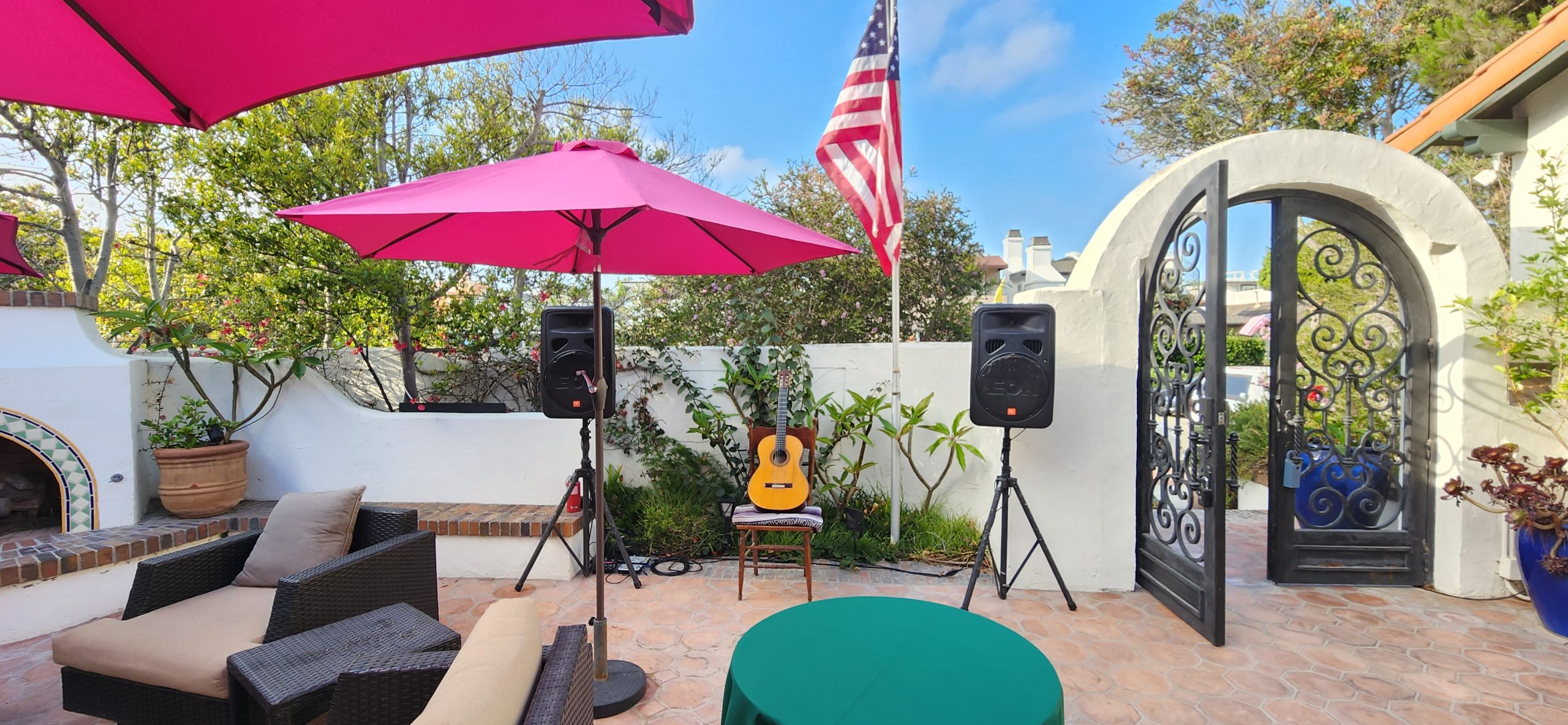
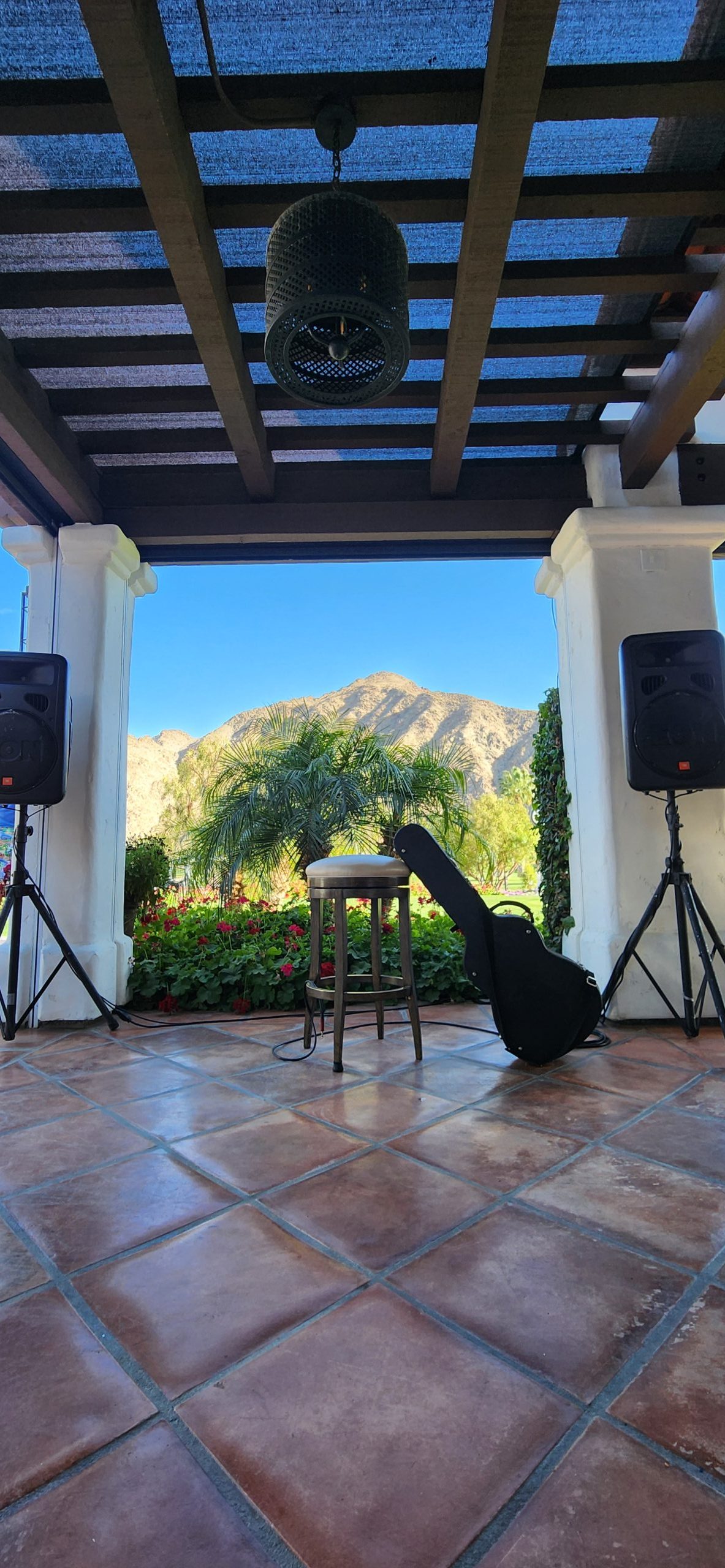
My setup for these ceremonies is a compact, battery-powered speaker. I place it low, beside or slightly behind the guests, and angle it toward the seating. Most guests never notice it is there; they simply notice that the music sounds lovely wherever they sit.
A Quick Test You Can Do at Your Venue
If you are unsure, try this on your next site visit. Ask someone to stand where the couple will stand and speak in a normal, calm voice, as if reading a short poem. Walk to where your back row will sit. If you can hear every word comfortably, a fully acoustic guitar will probably carry too. If you find yourself leaning in or missing words, especially with the wind blowing or a fountain running, plan for gentle amplification. Do the test at the same time of day as your ceremony if you can, because afternoon breezes and traffic change everything. Send me what you noticed, and I will confirm the right setup.
A Middle Path: Unplugged Ceremony, Amplified Cocktail Hour
Many couples split the difference. The ceremony is fully acoustic, intimate and equipment-free, and then the cocktail hour, which usually takes place in a larger and noisier space, is gently amplified. Because I bring my own system to every booking, switching between the two takes only a minute or two. Ask about this combination if your ceremony is small but your reception space is large.
What About the Officiant and the Vows?
Amplifying the guitar is only half of the sound picture. If guests cannot hear the vows, the ceremony loses its heart. Many venues and officiants provide a microphone; if yours does not, raise it early with your planner so the vows are covered. During the vows I either stay silent or play very softly, depending on your preference, so the spoken words always come first.
How Live Music Supports a Phone-Free Ceremony
If you are planning a phone-free unplugged ceremony, live music helps in a quiet way. The prelude gives guests something to listen to while they settle without screens, and the officiant's opening announcement asking guests to put phones away lands better when the room is already calm. Some couples ask me to pause briefly so the officiant can make that request, then begin the processional once phones are away. It turns a rule into a moment.
Venue Rules You Should Check
Before deciding, ask your venue three questions: is amplified sound allowed for the ceremony, is there a volume or time limit, and is power available near the ceremony site? Beaches, parks and some historic venues restrict amplification, while hotels and wineries often have specific rules for outdoor spaces. If amplification is not permitted, an unplugged ceremony becomes the plan by default, and I adjust the repertoire to suit. My battery-powered system means power is never the deciding factor.
Cost and Booking
With LA Acoustic, the choice between amplified and unplugged does not change the price. Sound equipment is included in every booking, and a ceremony typically falls in the $400 to $700 range. You can see full pricing in my 2026 Southern California guitarist cost guide. For a broader look at ceremony planning, read my wedding ceremony guitarist guide and the questions to ask before hiring a wedding guitarist. You can also browse the gallery, read about my experience, see the wedding guitarist service, or check your date and tell me about your venue.